
Your ESIM Card Unlocked What It Is and How to Use It
Forgetting to swap a physical SIM card before a trip can be stressful, but an eSIM card eliminates this hassle entirely. It is a small, programmable chip embedded directly in your phone that lets you activate a cellular plan without ever touching a piece of plastic. This means you can download a local data plan instantly after you arrive, simply by scanning a QR code or using a carrier app. You keep your original number active while enjoying affordable, reliable connectivity wherever you go.
What Is an Embedded SIM and How It Differs from Physical SIMs
An embedded SIM, or eSIM, is a permanently soldered chip inside a device, unlike the removable plastic physical SIM card. Its key difference is remote provisioning: you download a carrier profile via software, eliminating the need to insert or swap a tiny card. For users, this means easier carrier switching without hunting for a SIM tray, and the ability to store multiple profiles on one eSIM, though only one active at a time. Physical SIMs require you to physically handle a card, while eSIMs are managed entirely through device settings. Losing a phone with an eSIM can complicate transferring service without pre-stored backup credentials. Practically, eSIM frees up internal space for larger batteries or other components.
The technology behind a programmable chip
At its core, an eSIM relies on a tiny, rewritable embedded chip soldered directly onto a device’s motherboard. Unlike a physical SIM that you swap, this programmable chip stores multiple subscriber profiles in a secure memory area. You download a new carrier’s credentials over the air, which rewrites part of the chip’s data without removing any hardware. This means you can switch networks as easily as changing a Wi-Fi password, all from your phone’s settings menu. The chip itself uses a tamper-resistant design, similar to a bank card, to keep your digital identity safe while allowing flexible connections.
Physical SIM vs. embedded alternative: key contrasts
The primary contrast between a physical SIM and its embedded alternative lies in hardware versus software. A physical SIM is a removable plastic chip you swap between devices, while an eSIM is a soldered chip that cannot be removed. This shift gives you instant carrier switching without hunting for a tray or worrying about losing the tiny card. Activation moves from inserting a card to scanning a QR code or using an app. For travelers, juggling multiple profiles on one device replaces carrying a handful of physical SIM packets.
- Physical SIMs need manual insertion and removal; eSIMs activate via software download.
- Swapping carriers with a physical SIM requires a new card; eSIM lets you switch profiles in seconds.
- Lost physical SIM interrupts service; erased eSIM can be re-downloaded remotely.
Why carriers and device makers are shifting away from plastic cards
Carriers and device makers are ditching plastic SIM cards primarily to streamline logistics and boost device durability. Physical cards require expensive packaging, shipping, and swapping, while an embedded SIM eliminates all that hardware hassle. For you, this means smoother activation without hunting for a tiny card or using a paperclip. Phones can also be sealed tighter against water and dust without a removable tray. The shift also frees up internal space for larger batteries or slimmer designs. Q: Why are carriers moving away from plastic SIMs? A: To cut costs, improve device waterproofing, and remove the friction of physically swapping cards during plan changes.
Top Benefits for Frequent Travelers and Digital Nomads
For frequent travelers and digital nomads, the top benefit of an eSIM card is instant connectivity upon landing, skipping the hunt for local SIMs or expensive roaming plans. You can switch between regional data profiles in seconds, so your work never stalls waiting for a registration code.
A single eSIM plan covers multiple countries, meaning you maintain a stable hotspot for Zoom calls in a Lisbon café one day and a Bangkok coworking space the next, all without juggling physical plastic.
It also lets you keep your home number active while adding a local data-only line, ensuring clients can always reach you and you can book last-minute accommodation without hunting for Wi-Fi passwords.
Instant connectivity across borders without swapping hardware
For travelers crossing multiple borders, instant global network switching eliminates the disruptive cycle of purchasing local SIMs or swapping hardware. An eSIM activates a new data profile within seconds upon landing, directly on your existing device. This seamless transition ensures you remain reachable for essential tasks—like navigating from a foreign airport or confirming accommodation—without any physical card handling. The connection persists across frontiers, maintaining consistent data access without requiring you to source, install, or exchange a plastic SIM. This hardware-free workflow is the defining practical advantage for frequent border crossings.
Managing multiple local data plans on a single device
Managing multiple local data plans on a single device eliminates the need to swap physical SIMs when crossing borders. An eSIM allows you to store and switch between regional profiles simultaneously, so one profile handles high-speed data in Japan while another remains active for calls in South Korea. This setup prevents roaming fees by assigning each country a local plan, with manual or automatic profile selection based on your current network. The handset treats each eSIM as a distinct line, enabling real-time cost control without juggling multiple trays. Travelers can maintain local numbers for ride-hailing apps and keep a home plan for banking verification, all within one interface.
| Profile Management | Local Plan Benefit |
|---|---|
| Active in Japan | Unlimited data at ¥3,000/month |
| Active in Thailand | 30GB data for ฿299 |
| Home eSIM standby | Retains SMS capability for 2FA |
Cost savings compared to traditional roaming fees
For frequent travelers, the primary financial win of an eSIM is the drastic reduction in connectivity costs compared to traditional roaming fees. Old plans often charge exorbitant daily rates or per-megabyte prices, quickly adding up to hundreds of dollars per trip. eSIMs bypass this by providing access to local and regional data plans at a fraction of the cost. This shift transforms a recurring travel expense into a near-negligible budget line item. Instead of paying a carrier’s flat daily fee, you purchase only the data you need for specific destinations. Slashing international data costs by up to 90% is not uncommon, freeing up funds for experiences rather than phone bills.
| Traditional Roaming | eSIM Cost Savings |
| ~$10–$20 per day | ~$5–$10 per week |
| Pay for entire trip duration | Pay only for active data usage |
| Bills often contain hidden fees | Transparent, one-time purchase price |
Setting Up Your First Digital Profile: A Step-by-Step Guide
To begin setting up your first digital profile for an eSIM, ensure your device is unlocked and compatible. First, purchase an eSIM plan from a provider like Airalo or Holafly, receiving a QR code via email. On your phone, navigate to Settings > Cellular/Mobile Data > Add eSIM. Scan the QR code when prompted, then label the profile (e.g., “Travel Data”) for easy identification. Activate the line in your settings, ensuring your primary SIM stays active for calls. Finally, set eSIM as your default for cellular data and enable data roaming if required. This profile installs in minutes, giving you instant connectivity without a physical card swap.
Checking device compatibility before making the switch
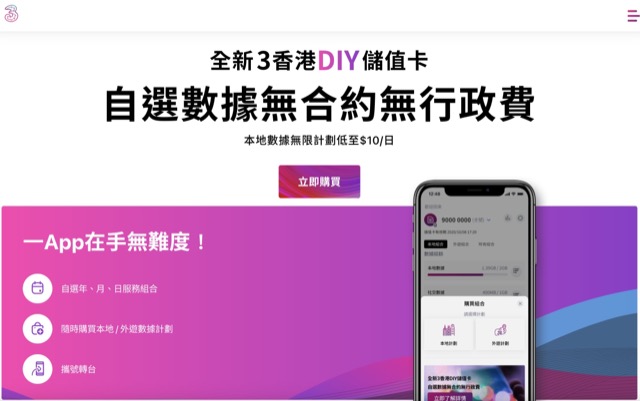
Before you can leap into the eSIM ecosystem, you must first confirm your device is unlocked and equipped with an eSIM chipset, as not all models support this technology. Check your phone’s settings menu under “Cellular” or “Mobile Data” for an “Add eSIM” option, or consult the manufacturer’s official compatibility list. Carrier-locked devices often restrict eSIM activation, even if the hardware is capable, so verify your phone’s unlock status before purchasing a plan. This single step prevents frustrating activation failures and wasted time, making device compatibility verification the non-negotiable first move in your setup process.

Downloading a network profile via QR code or app
To activate an eSIM, you download a network profile by scanning a provided QR code with your phone’s camera. This code, often emailed or shown on a screen, contains the necessary data to install the profile directly into your device’s eSIM manager. Alternatively, many carriers offer a dedicated app that downloads and installs the profile automatically after login. This process securely transfers eSIM network credentials without needing a physical card, enabling immediate service once the profile is activated in your phone’s settings.
Downloading a network profile via QR code or app is the primary method to install an eSIM, translating a scannable or app-delivered credential into a ready-to-use mobile profile on your device.
Activating and switching between profiles seamlessly
Once your eSIM is installed, activating and switching between profiles seamlessly is simple. Open your phone’s settings, find the mobile network or cellular section, and tap the profile you want to use—it activates instantly. To switch, just disable one profile and enable another; your device auto-connects without rebooting. This makes juggling a work number and a travel data plan effortless. For frequent trips, label each profile clearly (like “Home” or “Tokyo ESIM”) so you can swap in seconds without hunting for QR codes or physically swapping SIMs again.

Which Devices Support This Technology in 2025
By 2025, virtually every flagship smartphone from Apple, Samsung, and Google natively supports eSIM, with the iPhone 17 series and Galaxy S25 offering dual-active eSIM slots for two separate lines without a physical SIM tray. Mid-range devices like the Pixel 9a and Galaxy A56 also ship with eSIM, while budget models often still require a physical card. Laptops like the Surface Pro 10 and Dell XPS 15 now include eSIM for always-on cellular data, and smartwatches such as the Apple Watch Ultra 3 and Galaxy Watch 7 use eSIM to share your phone’s number. However, travelers still face a frustrating gap when their older car’s Infotainment system refuses to recognize the eSIM profile they just bought for the trip. Tablets like the iPad Pro remain eSIM-only in many regions, leaving users with no fallback if carrier setup fails.
Latest smartphones from Apple, Samsung, and Google
For 2025, the latest eSIM-compatible flagship smartphones include Apple’s iPhone 17 series, Samsung’s Galaxy S25 lineup, and Google’s Pixel 10 series. All models offer dual eSIM support, allowing two active profiles without a physical SIM. Setup is straightforward:
- Navigate to Settings > Cellular (iPhone), Connections (Samsung), or Japan eSIM Network & Internet (Google).
- Select “Add eSIM” and scan your carrier’s QR code or enter activation details manually.
- Confirm the profile; the phone reboots automatically to activate it.
Key nuance: Apple’s eSIM-only models (e.g., iPhone 17 Pro) lack a physical SIM tray, while Samsung and Google retain hybrid slots for one nano-SIM alongside eSIM. All integrate seamlessly with carrier app downloads for instant provisioning.
Tablets, laptops, and wearables with embedded capabilities
Tablets, laptops, and wearables with embedded capabilities in 2025 leverage eSIM technology to eliminate physical SIM trays, enabling direct carrier profile downloads. High-end tablets like the iPad Pro and Microsoft Surface Pro 9 offer eSIM for standalone 5G connectivity, while ultrabooks such as the Lenovo ThinkPad X1 Carbon use embedded eSIM for seamless LTE fallback on business travels. Smartwatches like the Apple Watch Ultra and Samsung Galaxy Watch 6 feature integrated eSIM for tetherless calling and streaming. Not all wearables support dual active lines, however, requiring a primary phone plan for data sharing. Embedded eSIM in laptops allows instant activation of cellular plans via device settings, bypassing hotspot dependence.
| Device Type | eSIM Implementation | Primary User Benefit |
|---|---|---|
| Tablets | Dual eSIM + physical SIM | Standalone 5G for remote work |
| Laptops | Soldered eSIM chip | Always-on LTE without dongles |
| Wearables | One active eSIM at a time | Phone-free calls and GPS |
Industry trends: growing adoption in IoT and automotive sectors
In 2025, the growing adoption in IoT and automotive sectors means eSIMs are now standard for smart city sensors, fleet management trackers, and connected vehicle telematics. Drivers can switch cellular plans remotely for 5G infotainment, while industrial IoT devices use eSIMs to self-provision network profiles during deployment. This eliminates physical SIM swapping in hard-to-reach equipment, streamlining global logistics. For automotive use, eSIMs enable over-the-air updates and emergency eCall services without manual card changes. The adoption sequence requires:
- Device manufacturers embedding eSIM chips during assembly
- Remote profile provisioning via centralized platforms
- Seamless carrier switching as devices move across regions
Potential Drawbacks and Limitations to Consider
While eSIMs offer convenience, potential drawbacks and limitations to consider include device incompatibility with older phones and carriers, which can leave travelers stranded. Switching profiles often requires stable Wi-Fi, a problem in areas with poor connectivity. You lose the ability to simply pop your SIM into a borrowed device, and managing multiple eSIMs can be confusing, leading to accidental data charges. Furthermore, rescuing a locked eSIM profile from a broken phone is far trickier than moving a physical card.
Carrier restrictions and lack of universal support
A primary limitation is that eSIM adoption remains subject to carrier restrictions and lack of universal support. Many mobile network operators still do not offer eSIM activation, or they limit it to specific postpaid plans, excluding prepaid users. Furthermore, a device purchased from one carrier may be locked to that network, preventing the addition of a new eSIM profile from a different provider. Even if unlocked, not all carriers support transferring an existing number to an eSIM, forcing users to keep a physical SIM. This fragmentation means you cannot assume eSIM will work seamlessly with every provider in every region.
Q: Why can’t I use eSIM with my current prepaid carrier?
The carrier simply may not support eSIM provisioning for any of their plans, or they may restrict it to postpaid accounts. This is a carrier-level decision, not a device limitation.
Security concerns around remote provisioning
Remote provisioning means your eSIM profile gets downloaded over the air, which opens a door for eSIM profile hijacking attacks if your network or device isn’t locked down. A hacker could intercept the activation code or exploit a weak server to install a fake profile, silently taking over your line and routing calls or messages to them. You also risk malware swapping your active profile without your consent, locking you out of your own number. Since there’s no physical card to lose, a successful digital theft is much harder to prove or reverse. Always use strong authentication on your account and only scan official QR codes.
Challenges when traveling to regions with limited adoption
Traveling to regions with limited eSIM adoption presents real, frustrating hurdles. You might find that local carriers simply don’t support eSIM profiles, forcing you to hunt for a physical SIM card upon arrival. This process can be a hassle if your phone lacks a physical tray or if you’ve already removed your home SIM. Even if eSIM works, connectivity can be spotty on unreliable local networks, making simple tasks like loading maps a chore. To avoid being stranded without data, double-check carrier compatibility before your trip.
Q: What happens if I can’t activate an eSIM in a region with low adoption?
A: You’ll likely need to buy a physical local SIM at the airport or a store, which could be tricky if your phone is locked or doesn’t have a dual-SIM slot.
How to Choose Between a Physical and a Virtual Option
When your trip demands juggling multiple local carriers for the best data, a virtual eSIM wins instantly—you switch profiles in seconds, no fumbling for tiny trays. But if you’re heading deep into a remote border region where local networks might reject your phone’s eSIM, a physical SIM becomes your lifeline, because you can pop in a dirt-cheap card from a village shop. How to Choose Between a Physical and a Virtual Option comes down to one honest question: Q: “Will I need to swap providers rapidly across different countries, or will a single local carrier carry me through a fixed itinerary?” A: If the answer is “rapid swaps,” go eSIM; if it’s “one deep-local carrier,” grab a physical SIM.
Evaluating your usage patterns and travel frequency
Before choosing, evaluate your usage patterns and travel frequency to match connectivity to your lifestyle. If you travel every few months for short trips, a physical SIM with a roaming add-on may suffice, but frequent flyers benefit from an eSIM’s instant plan swaps. Analyze your data habits: heavy streaming abroad demands gigabyte-heavy eSIM packages, while light check-ins can use budget physical prepaids. Your travel rhythm dictates convenience—annual globetrotters avoid fumbling with tiny cards, whereas occasional travelers might prefer one-and-done physical SIMs. Align this evaluation directly with how often and how intensely you rely on mobile data away from home, making your choice frictionless.

Comparing flexibility, cost, and ease of activation
When comparing flexibility, cost, and ease of activation, eSIMs offer superior flexibility, allowing you to switch carriers or add a local plan instantly without swapping a physical card. Physical SIMs often involve a purchase fee and shipping cost, while eSIMs can be activated for free or at a lower price directly from a provider. Regarding ease of activation, physical SIMs require waiting for delivery and inserting the card, whereas an eSIM activates via a QR code or app download in minutes. The key advantage is instant eSIM activation without physical delivery. The typical activation sequence is:
- Purchase an eSIM plan online.
- Scan the provided QR code or download a profile.
- Select the new line in your device settings to go live immediately.
Best practices for dual-SIM or hybrid setups
For dual-SIM setups, designate your primary line for voice and your secondary for data to avoid billing confusion. When using a hybrid eSIM arrangement, always verify your device supports simultaneous connections—some phones suspend the physical SIM when the eSIM is active for data. Prioritize carrier compatibility by testing one line at a time before committing both to critical tasks. For travel, activate a local data eSIM while keeping your physical SIM for two-factor authentication calls. Disable automatic network switching on your secondary line to prevent unintended roaming charges and battery drain.
| Best Practice | Why It Works |
|---|---|
| Assign voice to primary, data to secondary | Prevents accidental data overage on expensive voice lines |
| Test eSIM and physical SIM separately | Ensures no hidden incompatibility with your carrier’s network |
| Keep physical SIM active for authentication | Preserves access to bank and app codes while roaming |
| Disable auto-network selection on secondary | Blocks roaming fees and preserves battery life |
Future Outlook: The Road Ahead for Digital Connectivity
The road ahead for digital connectivity means your eSIM becomes a lifeline during a sudden power outage. Imagine your home network is down, but your phone instantly switches to a pre-loaded eSIM profile from a distant carrier, keeping your smart lock and family chat alive. Q: Will eSIM replace my home Wi-Fi in the future? A: Not entirely, but it will act as a seamless failover, bridging gaps when physical infrastructure fails, like during storms or travel. This shift turns your device into a self-healing hub, adapting to whatever connectivity emerges next.
Advancements in remote provisioning and standardization
Advancements in remote provisioning now allow an eSIM profile to be downloaded and activated over-the-air within seconds, eliminating physical SIM swapping. Standardization under GSMA’s latest SGP.32 specification ensures that any compliant device can securely connect to a carrier’s network without manual intervention. This means users can switch providers or add a data plan instantly from a device’s interface. Remote provisioning standardization is converging on a unified API layer, enabling seamless roaming profile downloads across carriers.
How does standardization affect remote provisioning for a traveler? It guarantees that a single eSIM profile can be pushed to your phone, tablet, or smartwatch from any participating operator, with automated fallback if the primary network fails.
Potential impact on mobile network operators and MVNOs
eSIMs will force mobile network operators and MVNOs to compete on service quality rather than SIM card logistics. Operators must overhaul backend systems to enable instant, over-the-air profile downloads, eliminating physical distribution costs. MVNOs gain the ability to deliver a fully digital onboarding experience, allowing users to switch providers within minutes. The primary shift is toward dynamic carrier flexibility, where networks must prioritize frictionless switching and transparent pricing to retain customers. To capitalize, operators should:
- Develop user-friendly apps for eSIM profile management and troubleshooting.
- Negotiate wholesale roaming agreements that allow seamless multi-network access.
- Invest in robust customer support for remote provisioning failures.
Predictions for a fully SIM-free ecosystem by 2030
By 2030, a fully SIM-free ecosystem will see devices activating connectivity instantly via embedded profiles, eliminating physical SIM trays entirely. Users will switch carriers or add data plans through a single device interface, with profiles downloadable over-the-air without manual provisioning. This will enable seamless multi-network roaming, where a handset dynamically selects the strongest signal without user intervention. The personal eSIM profile will function as a persistent, transferable digital identity, surviving device wipes and enabling immediate reactivation on new hardware. Device native connectivity will become standard, with manufacturers pre-loading universal carrier profiles for out-of-box service selection, reducing setup to a few taps.
By 2030, the SIM-free ecosystem will make connectivity an instant, software-defined feature, with profiles transferable between devices and networks selected automatically without physical or manual intervention.